Friday, June 3, 2011

2011 Mercedes-Benz S350 4MATIC BlueTec

2011 Mercedes-Benz S350 4MATIC BlueTec
The U.S.-market S350 will wear BlueTec badges and therefore use AdBlue urea injection to clean up the exhaust. It will be available exclusively with 4MATIC all-wheel drive. The 2011 ML350, R350, GL350, and E350 diesels use a similar turbo-diesel V-6 rated at 210 hp and 400 lb-ft. EPA ratings for the S350 BlueTec aren’t available yet, but the optimistic Europeans rate the S350 at a combined 37 mpg, so high 20s on the highway is a reasonable expectation for EPA tests. It’s sure to be more efficient than the gutsy S550 and S600 and perhaps even better than the S400 hybrid’s 19 city/26 highway mpg ratings.

Power-wise, the S350 will slot in at the bottom of the S-class range, with slightly less horsepower than the hybrid, but with the added bonus of heaps more torque. Expect it to be the slowest S-class, too; Mercedes says the European rear-drive S350 takes 7.8 seconds to reach 62 mph—for reference, we got the S400 hybrid to the 60-mph mark in 7.1 seconds. But Americans picking a diesel likely value other qualities higher than all-out speed.

Pricing is a little harder to pin down. Mercedes says it won’t release official numbers until closer to the model’s launch in the first quarter of 2011. We do know the S350 won’t be a stripper (a relative term with an S-class) and will be available with most of the same packages and equipment as other trim levels.

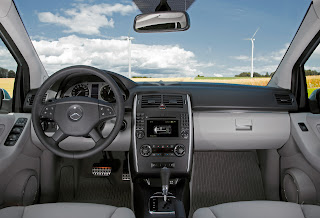
2011 Mercedes-Benz B-Class

2011 Mercedes-Benz B-Class
Mercedes-Benz B-Class, launched in 2005, is soon to be replaced by an all-new model. While our spy photos show that development is nearing completion, there are few confirmed details available on the small car's architecture.The new B-Class is expected to be the first Mercedes to benefit from the technology partnership between the German carmaker's parent Daimler and the Renault-Nissan alliance.

Powertrains for the new model are expected to come from Renault, including turbocharged 1.2, 1.4 and 1.8 litre petrol engines. A Renault-sourced 1.6 litre and a Mercedes 2.2 litre engine are expected to hold up the diesel end. Speaking with press at the Paris Auto Show last month, Mercedes' boss of development for the A and B-Class cars, Jorg Prigl said that the new cars will be built on a new advanced Mercedes-Benz Front-drive Architecture (MFA).

Speculation of a sedan version of the B-Class is not new, however a report this week by British magazine Auto Express suggests a launch for the 'BLS' sometime in 2014.As for the styling of the regular B-Class hatch, our rendering (bottom of article) draws from earlier spy photos, along with styling elements from the German carmaker's newest models.

2011 Mercedes-Benz B-Class F-Cell

2011 Mercedes-Benz B-Class F-Cell
F-Cell is a simple matter of unlocking the car via the keyfob switch, climbing in easily—thanks to the tallish crossover format—and switching on. The fuel cell takes very little time to come onstream, and it'll start and run at temperatures as low as minus 13 degrees Fahrenheit. There are none of the whirring, hissing and gurgling noises we recall from early experimental F-C vehicles, and the car barely hums as it comes to life. And that may have been the ventilation system.

The F-Cell is powered by a 100-kilowatt (136-hp) electric motor that produces about 214 lb-ft of torque pretty much all the time. This latest fuel cell is 40 percent smaller than the version in Mercedes-Benz's previous testbed, the A-Class F-Cell, yet it produces 30 percent more power while consuming 30 percent less fuel.

The F-Cell is a front-wheel-drive vehicle with electric power-steering assist and an electric air-conditioning compressor. As you'd expect on a vehicle of this kind, the windows and exterior mirrors are also power-adjustable. There's no overt hint of a bare-bones economy model about the car, which will help any technology-averse drivers adjust quickly.

Like the hybrid vehicles many of us are accustomed to, the F-Cell uses regenerative braking to help the battery pack stay fully charged. But since the batteries in a fuel-cell car are as much buffers (or capacitors) as they are energy sources, there are times when the fuel cell has enough juice to keep them fully charged, and you notice much-reduced regenerative braking when you lift off the pedal.

This in itself is amazing. If one's concern in an era of uncertainty about the use of fossil fuel is the likelihood of continued personal mobility, the F-Cell allows us a sigh of relief. Even if the romance of V12 exhaust symphonies and the excitement of 4-second sprints to 60 mph all disappears at some point, we'll still be able to roll down to the beach with the stereo pumping.

2011 Mercedes A-Class

2011 Mercedes A-Class
The future A-Class will be built on a new layout, called MFA (Mercedes Front-wheel drive Architecture), that has been conceived to support a much wider range of models and allows for four-wheel drive, paving the way for high-performance variants.

Changes will be made under the hood also: a new range of engines will power the future A-Class, but they also be used for other models. Hybrid versions are also under consideration. However, the most interesting rumors are talking about an AMG version for the model. It is believed Mercedes will offer a sportier version powered by a supercharged 2.0 liter unit capable of 325 hp.

The future generation A-Class will feature a simpler, cheaper arrangement that will allow the next generation of vehicles to sit nearer to the ground.Mercedes will opt for a more sportier and dynamic design, with lots of the exterior elements inspired by the F800 concept; the grille and the headlamps being the most distinguishable feature

2011 Mercedes S63 AMG

2011 Mercedes S63 AMG
Mercedes has released today the first details of the new 2011 Mercedes S63 AMG which will be launched in September this year. The 2011 Mercedes S63 AMG will be powered by the new AMG 5.5-liter V8 biturbo engine and will also be available with an additional AMG Performance package.

Without the performance package, the 2011 Mercedes S63 AMG will develop 400 kW (544 hp) at 5500 rpm and 800 Nm between 2000 and 4500 rpm. The top speed of the 2011 Mercedes S63 AMG is rated at 250 km/h, electronically limited, and the carmaker says it can rocket from 0 to 100 km/h in 4.5 seconds.

2011 Mercedes S63 AMG is 3.9 litres more economical than the preceding model powered by the naturally aspirated AMG 6.3-litre V8 – despite an increase in output by 14 kW (19 hp) resp. 34 kW (46 hp) and in torque by 170 and 270 newton metres. Engine specialists consider this achieved fuel saving of more than 25 percent to be nothing less than a quantum leap. CO2 emissions have likewise been significantly reduced: at 246 grams per kilometre, the figure is 28.5 percent lower than for the previous model.


Two turbochargers located next to the cylinder banks supply the eight cylinders with fresh air. At their maximum speed of 185,000 rpm under full load, the two turbochargers force 1750 kg of air into the combustion chambers per hour. The maximum charge pressure is 1.0 bar, and 1.3 bar with the AMG Performance package. Thanks to their specific, compact construction – the turbine housings are welded to the exhaust manifold – there are significant space advantages and the catalytic converters also heat up more rapidly. The new AMG V8 is the first turbocharged engine to dispense with the usual blow-off valve. This neat solution enabled the compressor housing to be made extremely compact. To ensure agile responsiveness with no time lag, all the air ducts in the intake tract are as short as possible. The wastegate valve, which reduces the pressure in the exhaust system during negative load changes, is vacuum-controlled via an electropneumatic converter. This allows dethrottling under partial loads, which in turn lowers the fuel consumption.


Tuesday, January 4, 2011

Mercedes Brabus T65 RS Vanish

Mercedes Brabus T65 RS Vanish
INTRODUCTION: A long-time BRABUS customer decided it was time to bring his SL 65 AMG Black Series into the tuning firm to make the car even more aggressive and while this version, known as the VANISH, is a one-off, all components used are available to other customers (so it’s really not a one-off if you think about it).

HIGHLIGHTS:Before Brabus turned its T65 RS Vanish over to its rightful owner, it took the car to Glamor Shots for a round under the lights and here are the results. The former Mercedes-Benz SL65 AMG Black Series is now a twin-turbo, 800-horsepower brute with 811 pound-feet of electronically limited peak torque – the engine's uncorked potential is 1,047 pound-feet. About the only other limit the Vanish has is top speed: it's capable of 206 miles per hour, but is limited to "only" 200.

SPECIFICATIONS:A BRABUS high-tech twin turbo system that includes two special exhaust manifolds with integrated turbine housings and high-performance turbochargers; four generously dimensioned intercoolers beneath the BRABUS carbon-fiber hood scoop; a BRABUS stainless-steel high-performance exhaust system with free-flow metal catalysts; and newly programmed engine electronics with special mapping for injection and ignition all serve to bump power to 800 hp (788 bhp) / 588 kW at 5,500 rpm and an even more impressive peak torque of 1,420 Nm (1,047 lb-ft), available at 2,100 rpm (peak torque is limited electronically to 1,100 Nm).

Monday, January 3, 2011

2010 Mercedes-Benz Vision S500 Plug-In Hybrid

2010 Mercedes-Benz Vision S500 Plug-In Hybrid
INTRODUCTION:"The Vision 500 Plug-in Hybrid is a new milestone on our path toward zero-emission mobility. It is a luxurious and safe S-class that offeres superior driving performance while at the same time consuming less fuel than current compacts," said Dr. Dieter Zetsche, Chairman of Daimler. "All of this shows that our top models will also be able to combine automotive fascination with responsibility for the environment."

HIGHLIGHTS:In order to achieve the astonishing numbers Mercedes is claiming for the Vision S500, it had to seriously increase the size of the car's lithium-ion battery pack. The battery in the S400 Hybrid only holds 0.9 kWh, and is small enough to fit in the engine compartment. The lithium-ion battery in the Vision S500 has a capacity over 10 kWh, and had to be installed in the trunk of the vehicle. With a bigger battery comes a larger weight penalty as well -- the S500's pack weighs around 286 pounds, while the S400's battery tips the scales at 165 pounds.

SPECIFICATIONS:
  • The advanced powertrain combines a 3.5-liter V-6 gasoline engine with an electric motor running on lithium-ion batteries. This unique setup will allow the Vision S500 Plug-In Hybrid to travel up to 18.6 miles on electricity alone. A rapid-charge setup allows the car to take a full load of electrons in just 60 minutes, but requires a 20 kilowatt source. A standard household outlet, which supplies closer to 3.3 kilowatts, takes about 4.5 hours to charge the battery.
  • When the battery is depleted, the 60-horsepower hybrid module will activate the V-6 engine and allow it to act like a conventional hybrid. A second clutch between the electric motor and combustion engine allows them to operate together or separately.
CONCLUSION: Vision S500 Plug-in Hybrid makes its debut later this month at the Frankfurt Motor Show, the only timetable Mercedes has given for production is to say "it will take some time" to reach consumers.